

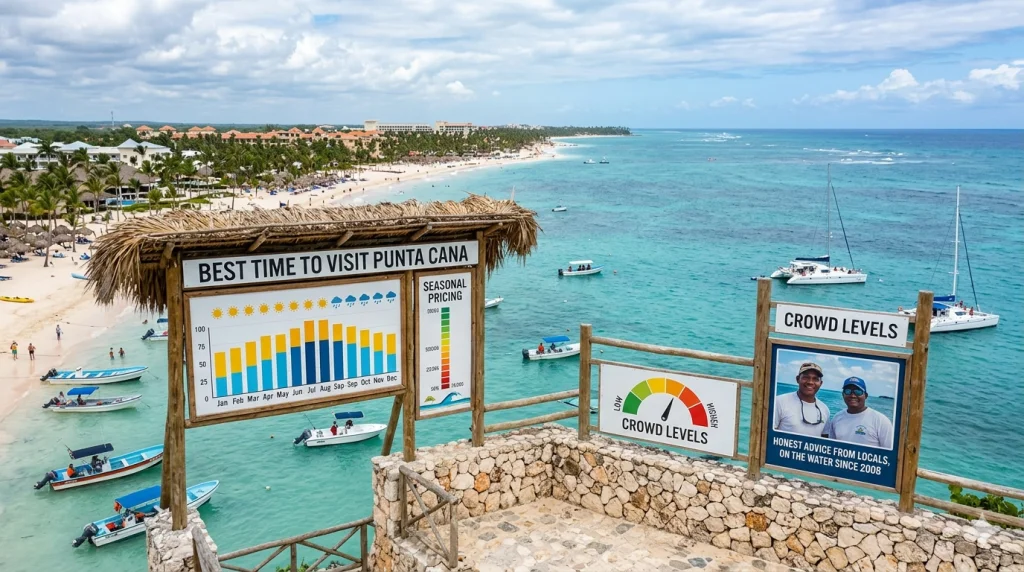
Best Time to Visit Punta Cana
Weather by month, seasonal pricing, crowd levels, and honest advice from locals who've been on the water here since 2008.
Short Answer
December through April is peak season — the driest weather, calmest seas, and best overall conditions. February and March are the sweet spot. If you want great weather at lower prices, May, June, and November are the shoulder months where you get 80% of peak-season weather at 60% of the cost. The rest of this guide breaks it down month by month so you can pick the right window for your trip.
Punta Cana Weather by Month
Average monthly conditions based on historical climate data. Toggle between °F and °C.
Average Temperature
Average Rainfall (inches)
| Month | Avg Temp | Water Temp | Humidity | Rainfall | Rain Days | Sea | Season |
|---|
Month-by-Month Guide
January
One of the best months to visit. Temperatures sit in the low 80s°F with low humidity and minimal rain. The post-holiday crowds thin out after the first week, but it's still peak season — resorts are busy and rates are high. Seas are generally calm with occasional swells from northern weather systems. Humpback whale migration begins, and you may spot them on the route to Saona Island. Book yacht charters well in advance — January fills up fast.
February
Widely considered the single best month. Warm, dry, low humidity, calm Caribbean water. Whale watching hits its peak. Carnival celebrations add local color. It's peak season pricing, but you're getting the best possible conditions. This is when we see the most yacht bookings — especially honeymooners and anniversary trips. Average highs around 83°F.
March
Nearly identical to February in terms of weather. Still dry season, still calm water, still warm. Spring break brings a younger, more energetic crowd in the second half of the month. Semana Santa (Holy Week) falls in March or April and is one of the busiest weeks of the year for Dominican tourism. Excellent snorkeling visibility. Our party boat charters pick up significantly in March.
April
The transition month. Early April still feels like peak season — dry and warm. By late April, humidity starts creeping up and you'll see the occasional afternoon shower. Tourist volume starts to dip after Easter, and you'll notice lower rates at resorts. Water temperature warms to about 80°F. This is one of the best value months — near-perfect weather at 15–20% below peak pricing.
May
The start of shoulder season. Temperatures climb to the mid-to-upper 80s°F. Rain picks up but it's mostly short afternoon bursts — 20 minutes of downpour then back to sunshine. This is when sargassum seaweed starts appearing on Atlantic-side beaches, though the Caribbean side where our yachts operate is much less affected. Resort prices drop noticeably. If you can handle a little humidity, May is an outstanding month for a yacht charter — warm water, emptier seas, better deals.
June
Officially the start of hurricane season, though June storms are rare in the eastern Caribbean. Temperatures are in the upper 80s°F. Rain increases slightly over May but most days are still predominantly sunny. Sargassum can be at its peak on the beaches. The water is beautifully warm — 82°F — and the seas are generally calm. Flights from the US drop $200–300 compared to February. June is underrated for visitors who don't mind warmth.
July
Hot and humid — highs around 89°F. This is when you feel the heat. Afternoon rain showers are common but usually brief. Tourist numbers tick up slightly as American and European families start summer vacation. Sargassum can still be present on Atlantic beaches. On the yacht, the ocean breeze and swimming stops make the heat manageable. Water temperature hits 83°F. Low-season pricing is in full effect.
August
The hottest month and the beginning of peak hurricane risk. Highs near 90°F with high humidity. Rain is more frequent, though still usually short-lived. This is the month to watch weather forecasts closely. We've operated through many Augusts without a single cancellation — but we've also had years where tropical systems forced rescheduling. Prices are at their lowest. If you book, make sure your travel insurance and accommodations have flexible cancellation.
September
The quietest month in Punta Cana. Resorts are noticeably empty — you'll have pools, beaches, and restaurants largely to yourself. This is peak hurricane season, and September historically sees the most named storms in the Atlantic. Temperatures start to ease slightly from August. Resort rates are 30–40% below peak season. Flights from the US can be $300–400 cheaper than winter. A calculated gamble — the payoff is an incredibly peaceful, affordable trip.
October
The rainiest month on paper — about 6 inches on average — but the rain is tropical: intense, brief, then gone. Hurricane risk remains elevated through mid-October, then drops off. Temperatures start cooling into the mid-80s°F. Sargassum largely clears out. This is the last month of rock-bottom pricing before the winter season starts. Snorkeling visibility is good once rain runoff settles.
November
The hidden gem month. Hurricane season technically runs through November 30, but late-season storms hitting Punta Cana are extremely rare. Rain starts tapering off. Temperatures settle into a comfortable mid-80s°F range. Tourist volume is low but starting to build toward the holidays. Resort rates are still 20–25% below peak. The water is warm (81°F), seas are calming down, and you get near-peak conditions without peak pricing. Our locals consider November one of the best months to be on the water.
December
Peak season begins. The first two weeks are a sweet spot — great weather, dry air, warm water, and moderate crowds. Then the holiday rush hits. Christmas through New Year's is the single busiest (and most expensive) stretch of the year. Resorts sell out, yacht charters sell out, and prices peak. If you're planning a December trip, book everything 2–3 months ahead. Weather is near-perfect: low 80s°F, low humidity, calm seas. This is the Punta Cana that travel magazines photograph.
Seasonal Pricing: What Things Actually Cost
Nobody on competitor sites tells you the real numbers, so here they are. Punta Cana pricing swings dramatically between peak and low season — and knowing the difference can save you hundreds.
| Peak Season Dec–Apr |
Shoulder May–Jun, Nov |
Low Season Jul–Oct |
|
|---|---|---|---|
| All-Inclusive Resort (per night) | $250–500 | $150–350 | $120–280 |
| Round-trip flights (from US) | $400–700 | $250–450 | $200–350 |
| Crowd Level | High | Moderate | Low |
| Yacht Availability | Book 4–6 weeks ahead | Book 2–3 weeks ahead | Often available same week |
| Overall Value | Best weather, highest cost | Great weather, great value | Good weather, lowest cost |
Sargassum Seaweed: What Nobody Else Tells You
If you've researched Caribbean travel at all, you've probably seen alarming photos of beaches covered in brown seaweed. That's sargassum — and yes, it affects Punta Cana, mainly from May through August. But context matters.
Sargassum hits the Atlantic-facing beaches hardest — Bávaro, Arena Gorda, and the northern hotel zone. The Caribbean side, south of Cap Cana where our yacht charters operate, sees significantly less. The water is clearer, the beaches are cleaner, and on the open ocean you rarely encounter it at all.
Most resorts clean their beaches every morning. You might see some seaweed in the afternoon, but by the next day it's cleared. On a yacht charter, our captains know the waters and navigate around any floating patches. In 18 years, sargassum has never ruined a charter.
Bottom line: If sargassum concerns you, visit between December and April when it's essentially absent. If you're coming in summer, don't cancel your trip over it — just set realistic expectations for the beach, and know that the water is still beautiful.
What Rain in Punta Cana Actually Looks Like
This is important because the word "rainy season" scares people away — and it shouldn't. Rain in Punta Cana is nothing like rain in New York, London, or Seattle. There are no gray, overcast, drizzly days that last from morning to night. That doesn't happen here.
A typical rainy-season day in Punta Cana: you wake up to sunshine. The morning is clear and hot. Around 2:00–4:00 PM, clouds build quickly, and you get a hard tropical downpour. It lasts 15–30 minutes. Then it stops, the sun comes back out, and the air feels cooler and fresher. That's it.
Most of our yacht charters depart in the morning and return by early-to-mid afternoon — before the rain window. In thousands of charters, rain has cut a trip short only a handful of times. When it does rain on the water, it's warm rain — guests usually laugh and keep their drinks in hand.
The only time rain genuinely disrupts plans is during tropical storms, which are tracked days in advance. If a storm is coming, we contact you to reschedule. But a normal "rainy season" day? You'll barely notice.
Best Time to Visit Based on Your Trip
Families with Kids
Best: Feb–Apr, Nov
Warm but not too hot. Calm seas for snorkeling with children. April and November offer lower prices and fewer crowds — less waiting, more space at the pool and beach.
Couples & Honeymoons
Best: Jan–Mar
Peak romance season. Perfect weather, whale watching, Carnival in February. Sunset yacht charters are at their best when the air is dry and the sky is clear. Worth the peak-season pricing for a once-in-a-lifetime trip.
Bachelor & Bachelorette
Best: Mar–May
Spring break energy in March, then prices drop through April and May. Our party boat runs year-round. Big groups benefit from shoulder-season pricing — you save more the bigger your crew.
Budget Travelers
Best: May–Jun, Sep–Nov
Flights drop $200–400, resorts drop 30–40%, and you still get good weather most days. September is the cheapest month overall. November is the best value-to-weather ratio in the entire year.
Snorkeling & Diving
Best: Mar–Jun
Calm seas, warm water (80–84°F), and excellent underwater visibility. The reefs off Saona Island and Catalina Island are at their best during these months. Turtle nesting season begins in May.
Whale Watching
Best: Jan–Mar (peak: Feb)
Humpback whales migrate through Dominican waters every winter. The main viewing area is Samaná Bay (north coast), but we've spotted whales from our yachts on the southern route. February offers the highest concentration.
Marine Life by Season
The Caribbean Sea off Punta Cana is alive year-round, but what you'll see changes with the seasons.
Humpback whale migration (peak February). Manta rays and eagle rays are active on the reef. Snorkeling visibility is good on calm days, though occasional winter swells can stir sediment.
Best snorkeling visibility of the year. Reef fish are abundant — parrotfish, angelfish, sergeant majors, yellowtail snapper. Sea turtles become more active, with nesting season beginning in May. Starfish are everywhere in the shallows near Saona Island.
Sea turtle nesting peaks. Warm water (83–84°F) brings pelagic fish closer to shore. Dolphins are frequently spotted on the route to Saona. Lionfish are active on the reefs — an invasive species, but interesting to see while snorkeling.
Water clarity improves as rain tapers off. Reef fish remain active year-round. The first humpback whale scouts arrive in late December. Stingrays are common in the sandy shallows. Water temperature cools slightly to a still-warm 79–81°F.
Frequently Asked Questions
February and March are the best overall months. You get warm temperatures (mid-80s°F), almost no rain, calm seas, and peak-season energy without the holiday crowds of December. If you want the best weather at a lower price, late April and May are excellent — still dry, fewer tourists, and resort rates drop significantly.
Hurricane season runs from June 1 through November 30, with the highest risk in August through October. That said, Punta Cana is on the eastern tip of Hispaniola and historically gets fewer direct hits than other Caribbean islands. Most "hurricane season" days are perfectly sunny. If you book during this window, just make sure your flights and accommodations have flexible cancellation policies.
Summer temperatures reach the upper 80s to low 90s°F, but you're on the water with ocean breeze the entire time. It doesn't feel the same as 90°F in a city. Our yacht charters run year-round and summer guests rarely complain about the heat — the wind, the swimming stops, and the shade on board keep it comfortable.
No. "Rainy season" in Punta Cana means a quick tropical downpour — usually 15 to 30 minutes in the afternoon — followed by sunshine. It is not all-day rain. Most days during the wet season (May through November) are mostly sunny. The rain is warm, it passes fast, and it rarely affects a full day on the water.
Sargassum is brown seaweed that washes up on Caribbean beaches, mainly between May and August. It affects the Atlantic-facing beaches (Bávaro, Arena Gorda) more than the Caribbean side where our yachts operate. On the water, sargassum is rarely an issue — our captains navigate around any patches. Resorts also clean their beaches daily. It's a factor to be aware of, but it's not a reason to avoid visiting.
September and October are the cheapest months. Resort rates drop 30–40% compared to peak season, and flights from the US are $200–400 cheaper. You trade lower prices for higher humidity and occasional rain, but many travelers find it's worth it. May, June, and November are the sweet spot — lower prices with minimal weather risk.
September and October have the lowest tourist volume. The resorts are noticeably quieter, beaches are less crowded, and you won't wait in line for anything. If you want a more private, relaxed experience — especially on the water — low season delivers that. Our yacht charters feel even more exclusive when the marina isn't packed.
March through June offers the best snorkeling conditions — calm seas, warm water (80–84°F), and excellent visibility. The coral reefs off Catalina Island and the Punta Cana coastline are clearest during these months. Winter months (December through February) can bring slightly choppier water on some days, but snorkeling is good year-round.
Humpback whales migrate through Dominican waters from January through March, with peak activity in February. The main whale-watching area is Samaná Bay on the north coast, not Punta Cana directly. However, it's possible to spot whales from Punta Cana during this window — our captains have seen them on the route to Saona Island, though it's not guaranteed.
Yes. Punta Cana is one of the safest tourist destinations in the Caribbean. The resort area is well-patrolled, and the tourism infrastructure is mature. We've been operating here since 2008 and our guests consistently feel safe. Standard travel precautions apply — don't leave valuables unattended on the beach, use hotel safes, and stick to reputable tour operators.
Yes. US, Canadian, and European citizens need a valid passport to enter the Dominican Republic. No visa is required for stays under 30 days — you'll receive a free tourist card on arrival. Make sure your passport is valid for at least six months beyond your travel date.
Ocean water temperature ranges from 79°F (26°C) in January–February to 84°F (29°C) in August–September. It's warm enough for comfortable swimming year-round without a wetsuit. Even in the "coolest" months, the water feels like a warm bath compared to most US beaches.
Book at least 4–6 weeks in advance for peak season (December through April). For the holidays specifically — Christmas, New Year's, Easter — book 2–3 months ahead. Off-season bookings can often be made 1–2 weeks in advance. Contact us with your dates and we'll let you know what's available.
Yes. We operate 365 days a year, weather permitting. The only days we cancel are when sea conditions are unsafe — which happens a handful of times per year, usually during tropical storms. If we cancel for weather, we reschedule at no charge or offer a full refund.
Request Your Quote
Fill out the form below and we'll get back to you with a custom quote
Plan Your Day on the Water
Whether you're coming in February or October, we run yacht charters year-round. Tell us your dates and we'll help you pick the perfect boat.
Browse Our Yacht Rentals