

Catamaran vs Monohull: Why (Almost) Every Punta Cana Charter Is a Catamaran
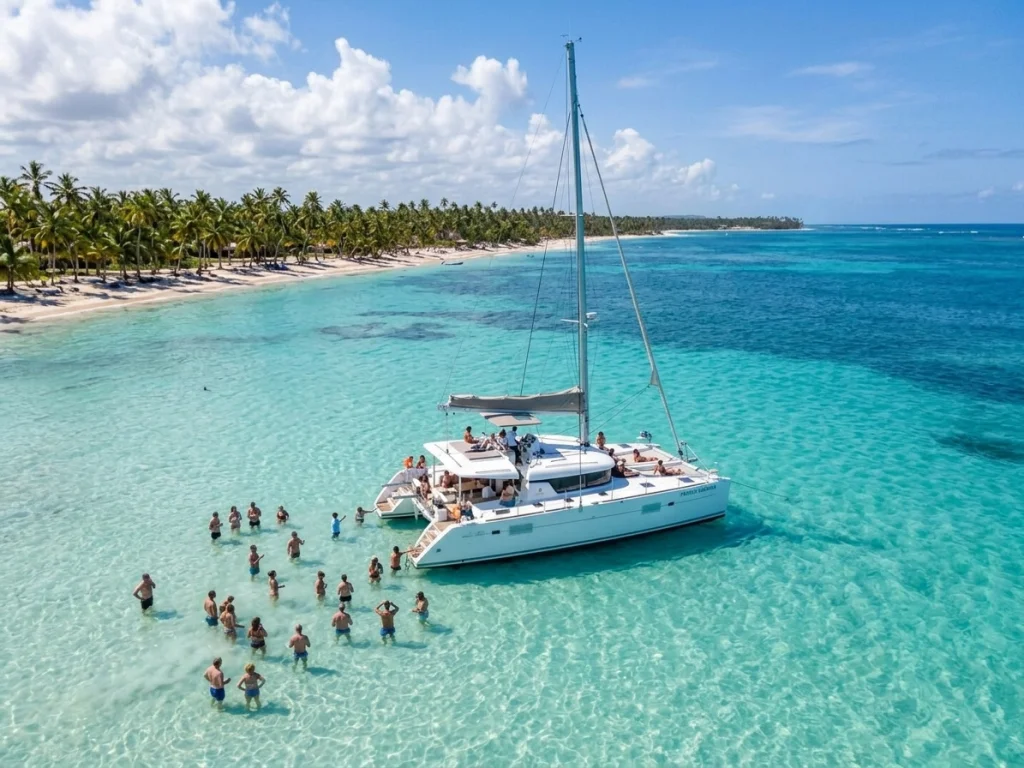
Short answer: If you're trying to choose between a "catamaran" and a "powerboat" for your Punta Cana charter, you're comparing the wrong two things. Catamaran describes the hulls — two of them — not the engine. The real choice is two hulls or one (a monohull), and in the shallow, reef-protected water where almost all Punta Cana charters happen, two hulls win for two concrete reasons: the water is too shallow for a monohull's deep keel, and catamarans are far steadier for guests who aren't used to boats. Here's the plain-English version of why nearly our entire fleet is catamaran — and the one trip where a monohull is the right tool.
First, clear up the biggest misconception
People say "catamaran vs powerboat" all the time. It's a category error.
- A catamaran is any boat with two hulls. It can be powered by engines or by sails.
- A monohull is a boat with a single hull — the shape most people picture when they think "boat." It can also be power or sail.
So "catamaran vs powerboat" mixes up two different questions. The one that actually matters for your day on the water is how many hulls — because that's what decides how the boat behaves in the water, how shallow it can go, and how much it rocks. Everything below comes down to that.
A 30-second glossary (so the rest makes sense)
Two boat words do all the heavy lifting in this post. If you're not a "boat person," here they are in plain English:
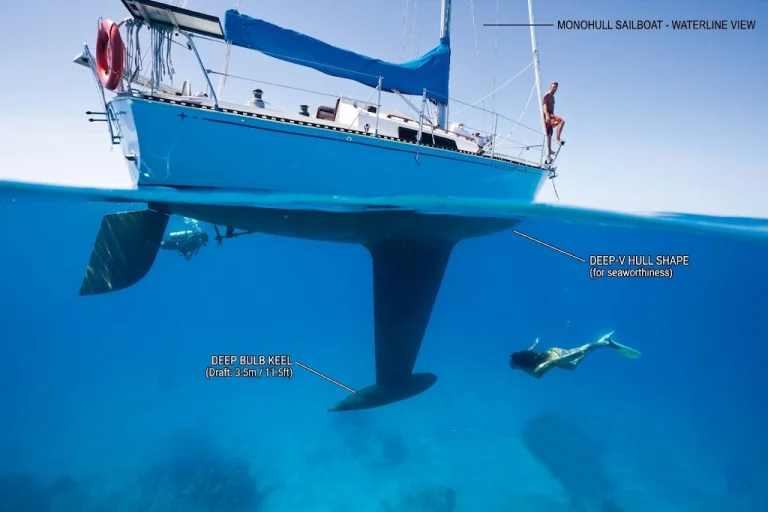
Draft — how deep the boat sits in the water, measured from the waterline straight down to the lowest point of the boat. Think of it as how much water the boat needs underneath it to float without hitting bottom. A boat with a "deep draft" needs deep water. A boat with a "shallow draft" can float in much less.
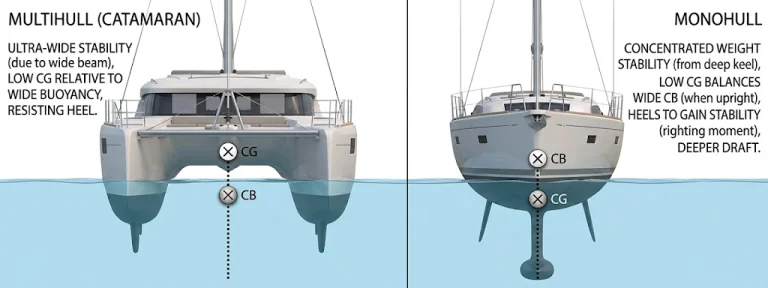
Keel — on a monohull, the keel is a deep, heavy fin that hangs down under the boat along its centerline. It does two jobs: it's weighted and sits low, so it acts like a counterweight that keeps the boat upright (and snaps it back when wind or waves push it over), and it grips the water so a sailboat can sail into the wind instead of just sliding sideways. The catch: all that stability lives deep underwater. A keel is the main reason a monohull has a deep draft.
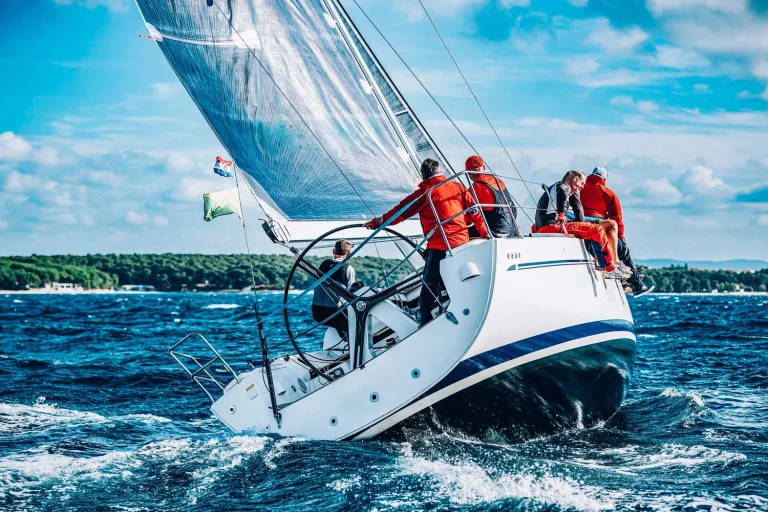
When a monohull leans over in the wind, that lean has a name: heeling. It's normal and even fun if you're a sailor. It's also exactly what makes a non-sailor grab the rail and start feeling green.
A catamaran does almost none of that. With two hulls spread wide apart, it gets its stability from width, not from a deep weighted keel. It sits flat, it floats high, and it stays level. Which brings us to why that matters so much here specifically.
Reason #1: the water in Bávaro is too shallow for a monohull
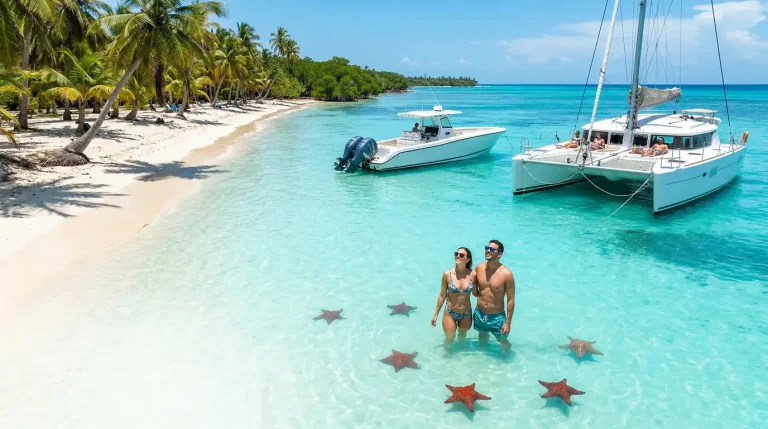
About 90% of Punta Cana charters run out of Bavaro Beach, and Bavaro sits inside a long coral reef. That reef turns the water into something like a giant lagoon — calm and flat, but also shallow: roughly 4 to 6 feet deep depending on the tide.
Now go back to the glossary. A monohull keeps itself stable with a deep keel, which means a deep draft — it needs a lot of water underneath it. In 4–6 feet of water, there's simply no room for a deep keel or a long rudder. A typical monohull would run aground.
A catamaran has no deep keel to worry about. Its stability comes from the two hulls being spread far apart, so it floats high with a shallow draft and operates comfortably in exactly the kind of thin water that defines Bavaro. This is the number-one reason nearly every boat here is a catamaran — not fashion, not marketing. The water itself decides it.
Reason #2: our guests are tourists, not sailors
The second reason is about who's actually on the boat.
We're in tourism. Most of our guests are not "boat people" — they don't own boats, don't sail, and are far more prone to seasickness and motion sickness than someone who grew up on the water. That's not a knock on anyone; it's just who books a vacation charter.
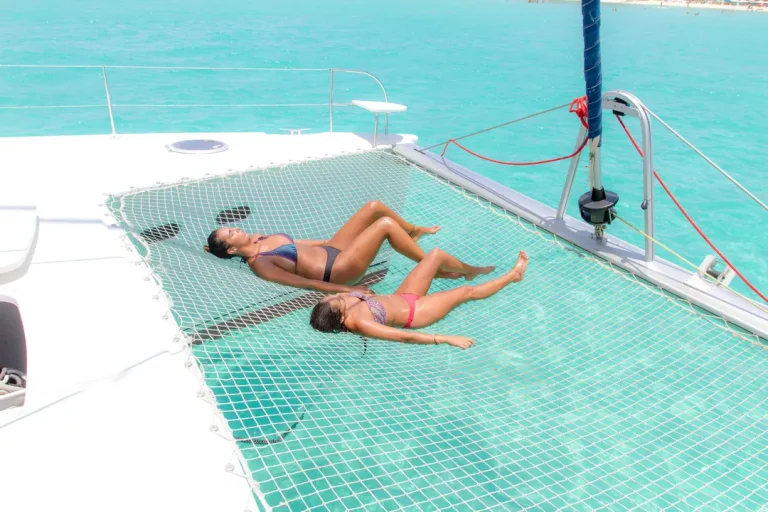
This is where the two-hull difference pays off again. A catamaran is dramatically steadier than a monohull — both when it's moving and when it's sitting at anchor. There's no heeling. No leaning, no white-knuckle tilt, no sliding across the deck. The catamarans we run here are slow, stable, and steady on purpose. You can hold a drink, walk around, and let your kids move about without the boat trying to tip the experience over.
(Could you, in theory, tack a small 16-foot catamaran upwind and sail it like a sport boat? Sure — but those don't exist in this market. The boats here are built for comfortable, level days on the water, not for sailing thrills.)
So when is a monohull the right boat?
Catamarans aren't "better" in some absolute sense — they're better for these conditions and these guests. There's exactly one trip in our world where a monohull is the right call:
Sport fishing out of Cap Cana. Cap Cana is a real marina opening straight into deep water — none of Bavaro's shallow-reef limits. Out there, you actually want a single hull. A monohull is more maneuverable and more agile in deep-water performance: it carves and turns the way you need when you're chasing and fighting fish. That's why our one and only monohull is the fishing boat. The right tool for the right water.
The crossing to Saona Island is deep water too, so a monohull could physically make the trip. But about 99.9% of people going to Saona are tourists — see Reason #2 — so we run catamarans there as well. Comfort wins over agility when the cargo is vacationers, not fish.
Catamaran vs monohull — side by side
| Catamaran (two hulls) | Monohull (one hull) | |
|---|---|---|
| Stability comes from | Width — two hulls spread apart | A deep, weighted keel |
| Draft (water needed) | Shallow — floats high | Deep — needs deep water |
| Heeling / leaning | Essentially none, sits level | Leans (heels), especially under sail |
| Best water | Shallow, reef-protected (Bavaro) | Deep, open water (Cap Cana) |
| Best for | Tourists, families, groups, all-day comfort | Sport fishing, maneuverability, sailors |
| In our fleet | Almost the entire fleet | The one sport-fishing boat |
Neither is "right." They're different tools for different water and different days. It just happens that the water where you'll spend your charter is the kind that calls for two hulls.
FAQ
Is a catamaran a powerboat or a sailboat? Either — that's the whole point. "Catamaran" just means two hulls. A catamaran can be driven by engines (a power catamaran) or by sails (a sailing catamaran). It's a separate question from how the boat is powered.
What's the real difference between a catamaran and a monohull? The number of hulls. A catamaran has two hulls and gets its stability from being wide, so it sits flat and has a shallow draft. A monohull has one hull and gets its stability from a deep, weighted keel, which gives it a deep draft and makes it lean (heel) in the wind.
What does "draft" mean on a boat? How deep the boat sits — the distance from the waterline down to the lowest point of the hull or keel. It tells you how much water the boat needs to float without hitting bottom. Catamarans have a shallow draft; monohulls have a deep one.
What is a keel and why does it matter? On a monohull, the keel is the deep, heavy fin under the boat. It keeps the boat upright and lets a sailboat sail into the wind — but it also means the boat needs deep water. Catamarans don't rely on a deep keel, which is why they work in shallow water.
Why are almost all Punta Cana charters catamarans? Two reasons. First, Bavaro — where ~90% of charters run — is only 4–6 feet deep inside the reef, too shallow for a monohull's deep keel. Second, our guests are mostly tourists who are prone to motion sickness, and a catamaran is far steadier and doesn't heel.
Will I get seasick on a catamaran in Punta Cana? It's very unlikely. Bávaro's water is reef-protected and flat, and catamarans sit level with no heeling. The exception is the deep-sea fishing trip, which is a monohull in open water — that one can be rough if you're not used to boats.
Do you have any monohulls? One — the sport-fishing boat out of Cap Cana, where the water is deep and a single hull's agility is an advantage. Everything else in the fleet is a catamaran.
Punta Cana Yachts has run private catamaran charters out of Bavaro since 2008 — slow, stable, steady boats built for a comfortable day on the water, whatever your group is into. (Wondering what a charter actually costs? Read Punta Cana Yacht Rental Prices. Not sure where your hotel really is? See Bavaro vs Punta Cana.)