

Cap Cana vs Punta Cana: What's the Difference? (A Local's Honest Answer)
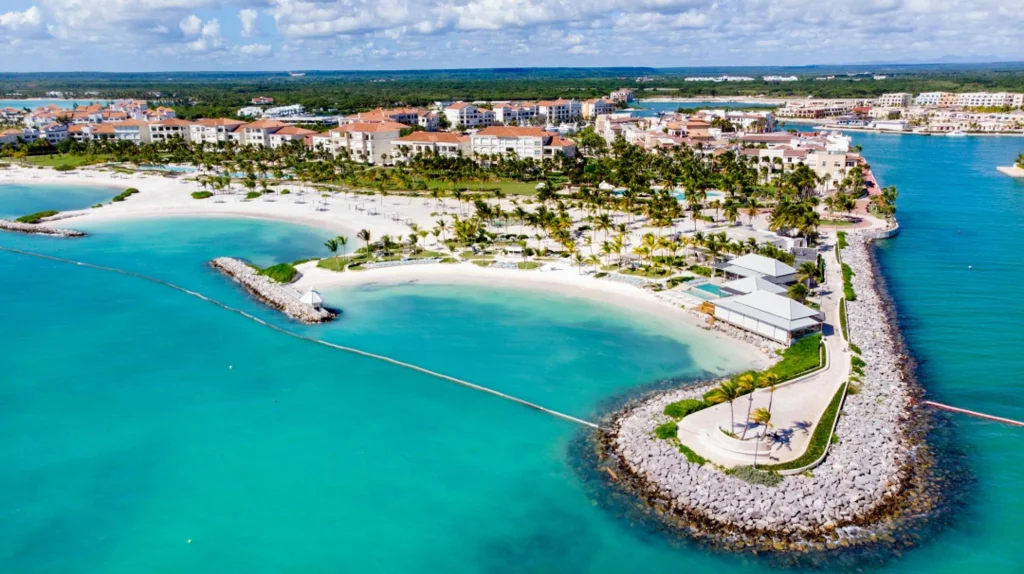
Short answer: Cap Cana and Punta Cana are two private, gated communities sitting next to each other on the southeastern tip of the Dominican Republic. They look similar from the road — clean streets, private security, manicured landscaping — but the people who built them had very different ideas about what they were building. Punta Cana is a community. Cap Cana is a resort destination. That difference shapes everything else.
If you haven't already, the companion post to this one is Bavaro vs Punta Cana, which explains how "Punta Cana" became the name for an entire stretch of coast that mostly isn't Punta Cana.
Two private communities, two different visions
Punta Cana was built by Frank Rainieri's family starting in the 1970s. From the start, the Rainieris designed it as a place where people would actually live. Today the streets inside Punta Cana are full of families — kids riding bikes, neighbors meeting for breakfast, an active church congregation. There are a handful of resorts inside the gates (Tortuga Bay, Club Med, Puntacana Resort & Club), but the personality of the place is residential, not touristic. It feels like a quiet, organized, North American–style suburb that happens to have a few hotels in it.
Cap Cana is owned by the Hazoury family. Their vision is the opposite: a high-end vacation destination. If Punta Cana is a small town, Cap Cana is closer to South Beach — sleek, glossy, geared toward travelers and party energy rather than school drop-offs. Both communities are private and gated. Both are clean, safe, and well-run. But the day-to-day rhythm inside each one is completely different.
Neither one is "better." They are different products.
The history Cap Cana would rather you not Google
Cap Cana launched in the early 2000s with an enormous splash. The Hazoury brothers — Ricardo and Abraham — sold the project as one of the most ambitious tourism developments in the Caribbean. The Trump Organization licensed the Trump name to a development inside Cap Cana called Trump Farallon Estates in 2007, and lots reportedly sold out the same day for north of $350 million.
Then came the 2008 financial crisis. The project stalled, then collapsed. Investors who had bought lots couldn't build, couldn't sell, and watched their money evaporate. The Trump Organization quietly pocketed roughly $12 million in licensing fees and walked away. Many of the original buyers lost everything to foreclosure.
The Trump Organization later sued the Hazoury brothers, alleging fraud. That lawsuit was settled in 2013 for an undisclosed amount. There were other lawsuits too, from other investors, with similar allegations.
Around the same time, Cap Cana went through a major debt restructuring — about $250 million in senior secured notes were renegotiated, cutting the company's debt by roughly $50 million. This is sometimes described locally as a bankruptcy, but technically it wasn't. When you owe that much money, the lenders prefer to restructure rather than liquidate. People still lost their savings. That money is not coming back.
I'm not telling you any of this to talk you out of visiting Cap Cana. I'm telling you because the place looks so polished today that it's easy to forget there are people who paid for that polish and never got their money out. It's part of the honest picture.
What changed after the restructuring
The biggest practical change was on the development side. Originally the Hazourys wanted to own everything — the land, the infrastructure, and every building project on top. After the restructuring, that model broke. The family still owns the land, but other developers can now bid on plots and build their own resorts, condos, and villas inside Cap Cana.
That single change is why Cap Cana has exploded over the last five years. Without exaggerating: there has probably been more construction inside Cap Cana in the last five years than in the previous twenty combined. New resorts, new condo towers, new villas. The roads are currently being redesigned to handle the extra traffic. The landscaping is genuinely spectacular — arguably nicer than Punta Cana's at this point.
It's a real, fast, visible transformation. If you visited Cap Cana in 2015 and again in 2025, you'd barely recognize it.
Cap Cana, side by side with Punta Cana
| Punta Cana | Cap Cana | |
|---|---|---|
| Who runs it | Grupo Puntacana (Rainieri family) | Cap Cana, S.A. (Hazoury family) |
| Personality | Residential community | Resort destination |
| Who lives there | Families, retirees, locals | Mostly tourists, second-home buyers |
| Resorts inside | A small handful | Around eight major resorts |
| Marina | None | Large man-made marina |
| Theme parks | None | Scape Park, El Dorado Water Park |
| Grocery store | Yes (real supermarket) | No (small markets only) |
| Gas stations | Multiple, easy to find | One, hidden |
| Vibe | Quiet, neighborly | Polished, vacation-mode |
| Visual impact | Understated | Genuinely impressive |
Both have private roads, private security, no motorcycles ripping through, no trash, no chaos. In a country where infrastructure can be hit-or-miss, both feel like islands of order. They function ten times better than the surrounding region. That's the family resemblance.
What's actually inside Cap Cana
Cap Cana is built around its marina — a large, man-made yacht basin that's the showpiece of the development. The marina hosts the annual Cap Cana Classic, a billfish tournament known internationally for catch-and-release blue marlin, white marlin, and sailfish.
The major resorts inside the gates include:
- Sanctuary Cap Cana (Marriott Luxury Collection)
- Eden Roc Cap Cana — the only Relais & Châteaux property in the Dominican Republic
- Hyatt Ziva Cap Cana and Hyatt Zilara Cap Cana
- Secrets Cap Cana
- Dreams Cap Cana
- TRS Cap Cana (adults-only)
- Fishing Lodge Cap Cana
Plus a growing number of boutique properties, residences, and villas.
For attractions, the two big draws are:
- Scape Park — the original adventure park. Zip-lines, the Hoyo Azul cenote, a small zoo, cultural exhibits, eco-trails. Kid-friendly, half-day to full-day visit.
- El Dorado Water Park — opened May 2024 and marketed as the largest water park in the Caribbean. Lazy river, wave pool, themed zones, snorkeling area, private beach. Currently open Thursday through Sunday.
The downsides nobody mentions in the brochure
If you're going to vacation in Cap Cana, plan to stay in Cap Cana. That sounds obvious, but here's what it actually means:
- No real grocery store. A few small markets exist, but if you want to do a proper grocery run, you have to leave the gates and drive to Punta Cana or Bavaro.
- One gas station, and you have to know where it is. It's not on any obvious corner.
- Excursion pickups cost more. This is the biggest one. Cap Cana charges outside operators — booze cruises, parasailing, ATVs, buggies, horseback riding, and yes, yacht charters — a premium fee to enter the gates and pick up "their" guests. That premium gets passed on to you. So the same tour that costs $X from a Bavaro hotel might cost $X + $30 to $$50 from Cap Cana. It's not a scam — every operator deals with it. But it's real money.
- There's gentle pressure to stay inside. Cap Cana wants you to use Cap Cana attractions. Scape Park and El Dorado are right there. The marina, the beaches, the resort restaurants — it's a self-contained vacation if you let it be.
This isn't a criticism. It's how the business model works. Cap Cana monetizes its private infrastructure, and tourists who choose Cap Cana are choosing that model. Just go in with your eyes open.
So which one should you book?
It depends entirely on what you want.
Stay in Punta Cana proper if:
- You want a quieter, more residential feel
- You like the idea of being among people who actually live there year-round
- You're booking Tortuga Bay, Club Med, or Puntacana Resort & Club specifically
- You don't need theme parks or a marina at your front door
Stay in Cap Cana if:
- You want a brand-name luxury resort experience (Eden Roc, Sanctuary, Hyatt)
- You like the marina lifestyle
- You're traveling with kids who'll love Scape Park or El Dorado
- You want maximum visual impact and you don't mind paying a small premium for excursions
Stay in Bavaro if:
- You want the widest selection of all-inclusive resorts at the most competitive prices
- You want easy access to off-resort restaurants and nightlife
- (See Bavaro vs Punta Cana for the full breakdown.)
Honestly? Visually, Cap Cana is the most impressive of the three. The landscaping, the marina, the new construction — it photographs beautifully. If that matters to you, that's the call.
Where do boats actually depart from?
Three different departure points, depending on what you're doing:
Cap Cana Marina is mainly a sportfishing hub. If you've booked a deep-sea fishing charter, this is probably where you're leaving from. Some private yacht and catamaran charters do depart from Cap Cana Marina too, but they're the exception, not the rule.
Bavaro Beach. There are no marinas in Bavaro. Most private yacht and catamaran charters along this coast leave directly from the beach near the cluster of large all-inclusive hotels. The captain brings the boat into the shallows, you walk out, you climb on. Simpler than it sounds. This is where our charters depart from.
Bayahibe. Every Saona Island trip — private charter or big tourist boat — departs from Bayahibe, about an hour west toward La Romana. The geography of the coastline forces it. So if you booked a "Saona Island tour from Cap Cana," the boat is leaving from Bayahibe and you've got a long van transfer each way. It's not a scam — every operator works that way. (More on this in Saona Island from Punta Cana: an honest guide.)
If you're staying in Cap Cana and want a private yacht or catamaran day, we coordinate hotel pickup — you ride to Bavaro Beach, board there, and we handle the rest.
FAQ
Is Cap Cana the same as Punta Cana? No. They're two separate private communities side by side. Punta Cana is residential and run by the Rainieri family. Cap Cana is a resort destination owned by the Hazoury family. Both are gated, private, and well-run, but the personality of each is very different.
Is Cap Cana safe? Yes — very. Like Punta Cana, it has private security, private roads, and almost no street crime. It functions like a small private city.
Is Cap Cana more expensive than Punta Cana or Bavaro? Generally yes, especially at the resort level. Cap Cana skews toward higher-end properties (Eden Roc, Sanctuary, Hyatt). Excursions and transfers also tend to cost a bit more because of the access fees Cap Cana charges outside vendors.
Can I leave Cap Cana to go to Bavaro for dinner or a tour? Of course — there are no restrictions on guests coming and going. But the distance, the time, and the premium that gets baked into outside excursions mean a lot of guests just stay inside the gates.
Are Scape Park and El Dorado Water Park inside Cap Cana? Yes, both are inside the Cap Cana development. Scape Park is the older adventure park with zip-lines and cenotes. El Dorado is the newer water park, opened in May 2024.
Is Cap Cana actually owned by the Hazoury family? The Hazourys are the founders and historically the controlling family. After the 2008 collapse and the debt restructuring that followed, the ownership structure became more complicated, with creditors holding significant stakes. The family still controls the land and the brand.
Which is more beautiful — Punta Cana or Cap Cana? Honest answer: visually, Cap Cana. The marina, the landscaping, the newer construction — it's the more photogenic of the two. Punta Cana is more understated. People who live here often prefer Punta Cana for exactly that reason.
Punta Cana Yachts has operated private yacht charters from Bavaro Beach since 2008. We coordinate pickup from Cap Cana, Punta Cana, Bavaro, and Uvero Alto — including for our most popular trip, the private Saona Island excursion.